The Best Way to Clear Brush and Small Trees in North Georgia
Hand tools, brush mowers, or a mulcher. What it takes to reclaim overgrown acreage in Gilmer, Fannin, Pickens, and Cherokee counties.
You bought your land for the space and the view. Then somewhere along the way, part of it got swallowed. Privet, briars, saplings, and kudzu crept in until there's an acre or two you can't walk across, can't see past, and mostly just quit looking at.
If you've stood at the edge of that mess wondering where to start, you're in good company. Just about every landowner from Ellijay to Blue Ridge runs into the same thing sooner or later. There's more than one way to get that ground back, and some of it you can do yourself. This post runs through all three options: hand tools, brush mowers, and forestry mulching. By the end you'll know which one fits your property.
We're Ferguson Siteworks. We clear land around Ellijay, Blue Ridge, Jasper, Canton, and the rest of Gilmer, Fannin, Pickens, and Cherokee counties. We've cleared thousands of acres of this exact kind of overgrown mountain property. We know what a man can knock out on a Saturday, and we know when it's more than that. We'll tell you straight which one you've got.
Start by Sizing Up the Job
Before you buy a tool or call anybody, walk the area and get honest about three things. How big is it, how thick is it, and how rough is the ground.
A shady corner of saplings behind the house is nothing like three acres of privet and briars on a hillside. Mark which trees are under about 4 inches across, because those you can handle yourself. Anything bigger is a different job. Watch for poison ivy, thorny stuff, hidden stumps, and the kind of uneven ground that'll roll an ankle.
That walk decides everything else. It tells you which of the three options below is right, and it tells you where doing it yourself quits making sense.
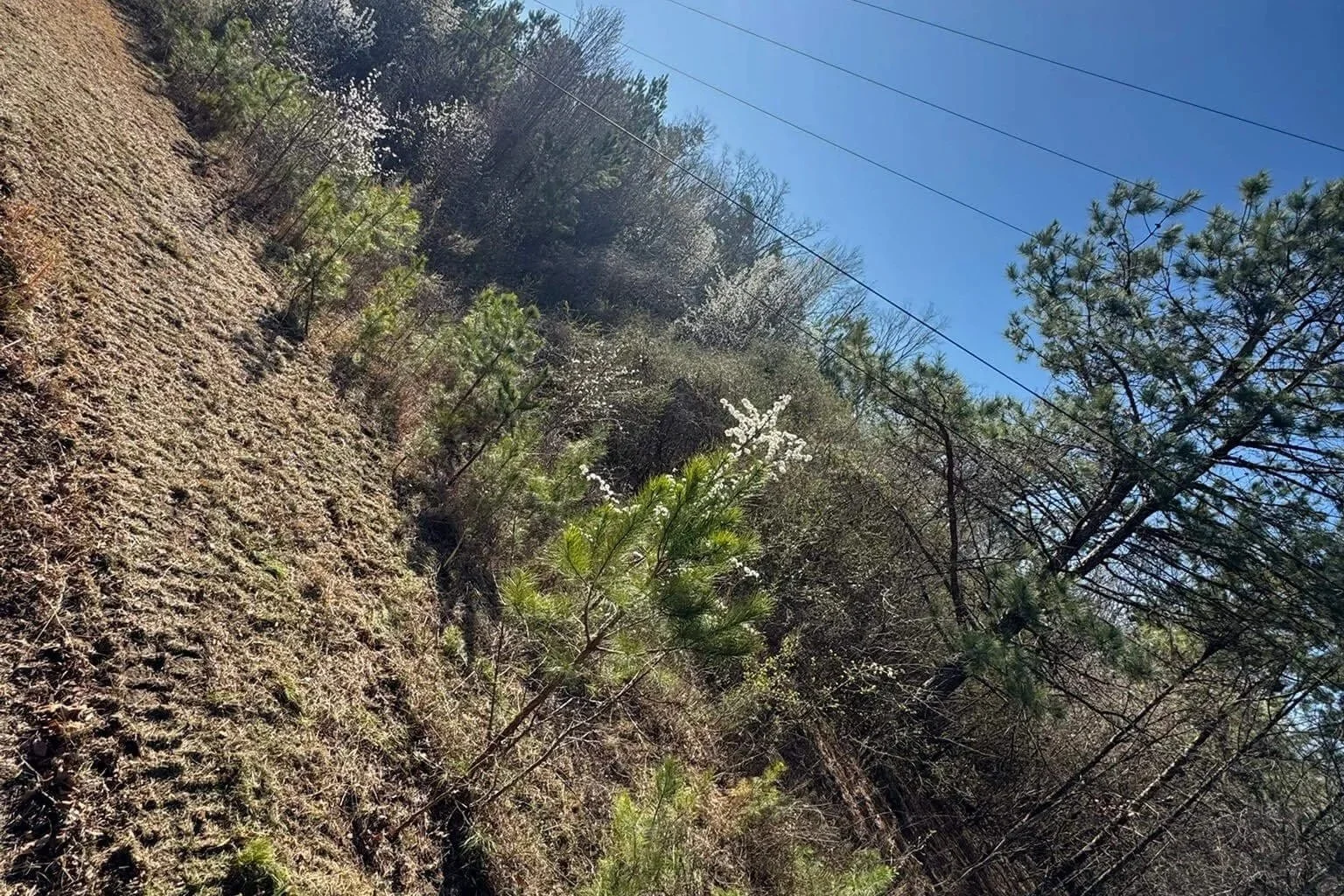
Brush Clearing in Ellijay Georgia
Option 1: Clearing Brush and Small Trees by Hand
For a small patch you can measure in feet instead of acres, hand tools work fine. Opening up a fence line, cleaning out a corner, thinning a spot by the driveway.
The kit is simple. A good pair of loppers. A bow saw or pruning saw for anything under 3 inches. A small chainsaw with a 14 to 16 inch bar for the 3 and 4 inch stuff. If you want saplings gone for good instead of growing back, a brush grubber hooked to an ATV or a truck will pull them out by the roots.
Work in sections. Clear a 10 by 10 patch at a time so you can see you're getting somewhere instead of staring at the whole thing.
Good for: small yards, one overgrown corner, fence lines. The catch: it's slow and it's hot work, and it doesn't scale. What's a decent Saturday on a quarter acre turns into a month of lost weekends on real acreage.
Option 2: Brush Mower or Rented Equipment
When you've got more than a corner but still under an acre or so, a brush mower is the next step up. It's built for rough ground, and it'll cut stems and trunks up to about three inches.
Plenty of folks rent one for a weekend instead of buying. That makes sense, since clearing isn't something you do more than once or twice a year. A compact tractor with the right attachment covers a lot of the same ground.
Good for: light to medium brush on up to about an acre of fairly flat ground. The catch: a rental won't touch dense growth or anything past a few inches, and it leaves the stumps sitting there. On the steep, rocky ground we've got around Blue Ridge and Ellijay, it gets dicey in a hurry. You'll clear the easy part and stall out on the rest.
Option 3: Forestry Mulching for Real Acreage
If you're looking at multiple acres of thick brush, saplings, and small trees, forestry mulching is the fastest and cleanest way to clear it and be done.
A forestry mulcher is one machine that cuts, grinds, and clears in a single pass. Brush, saplings, and small trees go straight to mulch and stay right there on the ground. No cutting, then piling, then hauling, then burning. Nothing left over to deal with when the machine leaves.
The difference in speed is not small. A weekend by hand barely dents an acre. A mulcher clears that same acre in a fraction of the time and leaves it looking finished. The mulch feeds the soil and holds the dirt in place on a slope, which beats a row of burn piles.
Good for: an acre or more, thick growth, mixed brush and small trees, sloped mountain ground. The catch: it's a service, not something you rent for the weekend. Which is the point once the job outgrows what you can do yourself.
So Which One Fits Your Property?
It comes down to how much ground you're dealing with.
A corner or a fence line? Hand tools and a free Saturday.
Up to an acre of light growth on flat ground? Rent a brush mower.
Real acreage, thick growth, or a hillside? Forestry mulching.
The mistake we run into most around here isn't people calling too soon. It's people burning three weekends and a rental fee to get halfway through five acres, then calling us to finish it anyway. If that walk you took in step one had you thinking "this is a lot of land," you've already got your answer.
How Brush Clearing Changes the Way Your Property Functions
You walk your whole property again, not just the mowed part by the house. The view you bought the place for comes back. The ground is open and safe and ready for a garden, a pasture, a building site, or a trail to walk of an evening.
The other way it goes: another year of it getting thicker. Overgrowth doesn't sit still. Every season the privet and the saplings spread, the small trees get bigger around, and the job costs more to clear than it would have. The fire risk climbs, and so do the snakes and ticks.
Overgrown land is one of the few problems that gets worse the longer you look at it. The best way to clear brush and small trees is whichever one gets it done.
Already know it's more than a weekend job? Ferguson Siteworks clears brush, saplings, and small trees around Ellijay, Blue Ridge, Jasper, Canton, and all of North Georgia. Mulched in place. No burning, no hauling.
Click here to get your free quote today.
Frequently Asked Questions About Brush Clearing in North Georgia
What's the cheapest way to clear brush and small trees?
On a small patch, doing it yourself is cheapest. Loppers, a bow saw, a small chainsaw, and your time. That flips once the job gets big. If you're renting equipment for three weekends to get through several acres, one pass with a forestry mulcher usually costs less all in and finishes in a day instead of a month.
Can I clear overgrown land myself in North Georgia?
For a small, manageable patch, sure. Hand tools handle a fence line or a corner just fine. Where it stops working is acreage, thick growth, and steep ground. On the rocky hillsides we've got up here, and on anything past an acre of heavy brush, clearing by hand gets slow and wears you out, and it can get unsafe.
What's the fastest way to clear an acre of brush and saplings?
Forestry mulching. One machine cuts and grinds brush, saplings, and small trees into mulch in a single pass, with no hauling or burning afterward. What takes a weekend or more by hand takes a fraction of that with a mulcher, and the ground is finished when it's done instead of covered in brush piles.
Is forestry mulching better than a bush hog for clearing small trees?
For small trees, usually yes. A bush hog does fine on grass and light brush, but it struggles with saplings and small trunks and leaves rough cut material behind. A mulcher grinds trees up to [Ben to confirm: max tree diameter] inches into fine mulch and handles thick growth a bush hog can't get through. That's why it's the tool for reclaiming overgrown acreage.
How much does it cost to clear brush and small trees in North Georgia?
It depends on how many acres, how thick the growth is, and how rough the ground is. As a rule, mulching runs less than traditional clearing because there's no hauling or disposal, and prices in the Southeast tend to sit under the national average.
